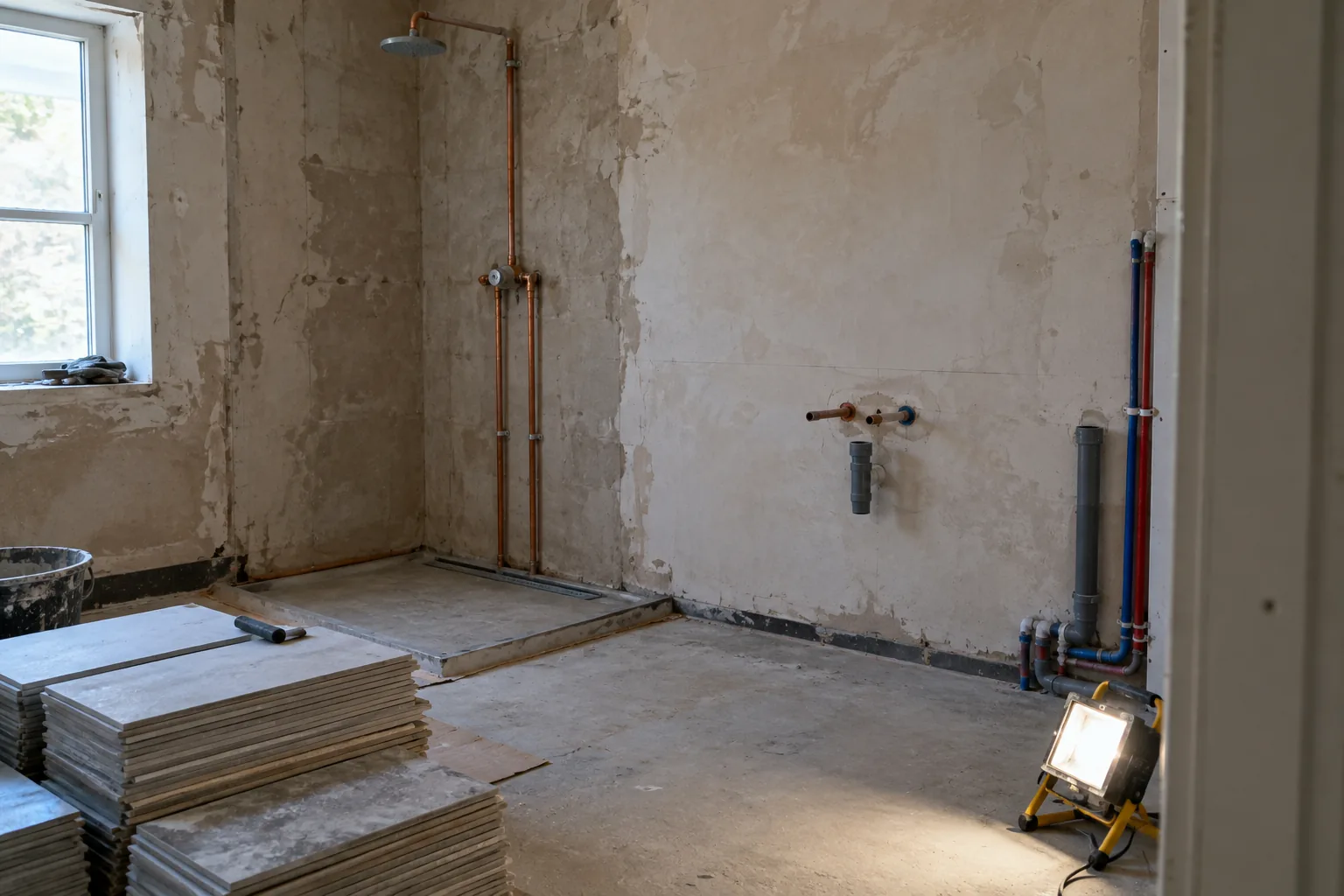
What plumbing does a bathroom renovation involve?
A bathroom renovation involves four plumbing jobs: water supply, drainage, fittings and, when needed, the geyser connection.
Moving a toilet, basin or shower means new pipe runs. The hot and cold supply lines go to the new position, and the waste pipe has to run to the drain with a steady fall so the water leaves. A new shower also needs a mixer or valve that suits the water pressure and temperature. If the geyser is old or the pressure is poor, a new shower may show it, so see geyser repair or replacement before the walls close.
What should I ask the plumber about a bathroom renovation?
Ask questions that settle who does what, and when, before any wall is closed. Every bathroom and every fitting is different, so the plumber's answers will differ from one job to the next.
- Which fittings are moving, and how far do the supply and waste pipes have to run?
- What type of shower do you plan, and what does that fitting need from the wall and the water supply?
- Is the toilet floor-standing or wall-hung, and what does the fitting maker require behind or under it?
- Will the pipes be pressure-tested before they are covered, and who confirms the result?
- Who is responsible for waterproofing, and when does that work happen in relation to the plumbing?
- Who supplies the fittings, and what is included in the quote?
- When will the water be off, and for how long?
Planning a bathroom? Request a quote and we call you back, or call 060 086 9889.
What should I tell the plumber?
Tell the plumber what you plan, as precisely as you can, and decide where each fitting goes before the walls are tiled, because moving a pipe afterwards means breaking tile.
Settle five things first. The shower type, and where the valve sits. The toilet type. The basin type and tap position. The heights of the fittings. And where the isolating valves go, so each fitting can be switched off on its own. Have the actual fittings on site, or at least their data sheets, because the pipe positions follow the fitting, not the other way round. A rough drawing with measurements shows the plumber what you plan. Write the decisions down and send them with your request.
What does the plumbing part of a bathroom renovation cost?
Plumbing is one line in a bathroom budget, and it moves with the layout. A fair price needs a look. It depends on how many fittings move, how far the pipes run, the floor and wall construction, and what condition the old pipework is in.
The page on what a plumber costs sets out the published hourly rates and call-out fees, each with its source and date. Ask for the quote in writing, line by line.
Where we do this: plumber in Claremont, plumber in Sea Point, plumber in Durbanville, plumber in Bellville and plumber in Table View. See all plumbing services or where we work.
Tiler booked? Request a quote and we call you back, or call 060 086 9889.
Who signs off the plumbing, and when is a Certificate of Compliance needed?
A Plumbing Industry Registration Board (PIRB) Licensed Plumber issues PIRB's own Certificate of Compliance. For a property sale in Cape Town, the City has a separate transfer form for the water installation. A City-registered plumber completes it, and the conveyancing attorney submits it before transfer.
Whether your renovation needs a certificate of its own is a question for the plumber, so ask and get the answer in writing. The plumbing Certificate of Compliance guide explains the two documents.
Questions people ask
Can I move my toilet or shower?
Usually yes, but the waste pipe needs a steady fall to the drain, so how far you can move it depends on the floor.
The plumber checks the floor, the existing drain and the distance on site before quoting.
Does the plumber do the waterproofing and tiling?
Plumbing is one trade of several. Ask what the quote includes, because waterproofing and tiling are usually separate trades from the plumbing work.
Put the question in your request and the plumber can tell you what is and is not covered.
Will my water be off during the renovation?
At times, yes. The plumber isolates the supply while pipes are changed, so ask when the water will be off and for how long.
Raise it when the plumber assesses the job, so the plan fits your household.
Should the pipes be tested before they are covered?
A pressure test shows a leak while pipes are still in view, so ask the plumber whether one is planned before any wall is closed.
If damp shows up later, leak detection looks for where it comes from.